
Why Does Your Furnace Smell Like Burning When You Turn It On?
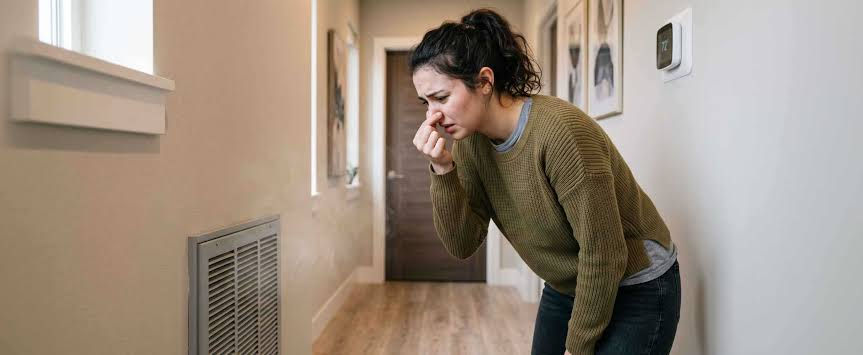
Accumulated dust and debris is the most common cause, according to Lennox. Carrier explains that dust settles on parts like the burner and heat exchanger over the summer, and when the heat comes on for winter, those parts heat up quickly and the dust burns off, which can send a burning smell out of your heat registers. Lennox adds, "In most cases, a burning smell isn't cause for concern, especially when the unit is first started after not being in use."
The dust smell "can last anywhere from about 30 minutes to a few hours when the furnace is first turned on for the season," Carrier says, and "If the smell persists beyond a few hours or becomes stronger, it should be investigated." Lennox lands in the same range: "Let your unit run for an hour or two and the smell should subside or disappear." The "about an hour" figure on Trane's page sits under its heading for a new furnace, so it describes a brand-new unit, not dust at the start of a season. Below: how long the smell should last, which smells mean shutting the furnace off, gas and CO safety, and how to lower fire risk.
What Causes a Furnace Burning Smell at the Start of the Season?
Dust burn-off is the burning smell made when dust that settled on a furnace's burner and heat exchanger during the off-season cooks off the first time the furnace heats up again.
Carrier describes it plainly: "During the summer months, dust settles on furnace components like the burner or heat exchanger." When you first turn on the heat at the beginning of winter, those parts heat up quickly, and the dust burning off can cause a burning smell from the registers.
Trane takes the same calm view for the first fall start: "If you notice a burnt smell from the furnace when it kicks in for the first time in the fall, don't panic." Its advice is to wait it out, and it says the smell "should dissipate relatively quickly."
A smell that fades within a few hours fits this pattern. One that hangs on, grows stronger, or smells like plastic, metal, oil or rotten eggs does not. For the rest of the fall checklist, see this guide to getting your furnace ready for the winter season.
How Long Should the Burning Dust Smell Last?
Furnace makers give slightly different windows, and they treat a seasonal start and a brand-new furnace separately.
Situation | Maker | What the maker says |
First start of the season | Carrier | About 30 minutes to a few hours |
First start of the season | Lennox | Run the unit an hour or two |
First start of the season | Trane | Should clear relatively quickly |
Brand-new furnace | Trane | Odors should clear in about an hour |
Brand-new furnace | Lennox | Run a few hours in a well-ventilated home |
Carrier also sets a point for action on a seasonal start. If a burning smell lasts longer than a few hours or becomes stronger, Carrier says to "turn off the furnace and have the system inspected by a qualified HVAC professional."
Note the time when the heat first kicks on. A smell fading within an hour or two matches Lennox and Carrier. One still there after a few hours, or getting worse, is past Carrier's limit.
What If a New Furnace Smells Like Burning?
A brand-new furnace can smell on its first run too. Trane says, "The first time the new furnace kicks in, you may notice the smell of burning dust, burning plastic, or burning oil," and "Any odors should dissipate in about an hour." Lennox gives a longer window for a new unit: "Let your unit run for a few hours in a well-ventilated home and the odor should disappear."
Trane also sets a limit for a new install: "If odors are persistent or you see smoke, call your HVAC installer immediately."
Which Furnace Smells Mean You Should Turn It Off?
Some odors point past dust to a problem that needs a technician before the furnace runs again:
Burning plastic. Trane says, "If you notice the smell of burning plastic when your furnace is running, you may have an electrical problem," calls it "a big safety hazard," and says to turn off the furnace and call for HVAC repair. Carrier recommends stopping use of the furnace on a burning plastic odor and having a qualified HVAC professional inspect it before operating it again.
Metallic. Lennox says, "If the odor is metallic, this could be a sign of a serious electrical problem," and says to turn off the unit immediately.
Oily smell from an oil furnace. Carrier says, "If you have an oil furnace, that oily smell could indicate an oil leak, burner issues or even a heat exchanger failure." Carrier's guidance is to turn the system off if the odor is strong or persistent.
Once the furnace is off, leave the cabinet closed and let a technician open it.
What Should You Do If the Furnace Smells Like Gas or Rotten Eggs?
A rotten egg smell is a different problem from burning dust. Peoples Natural Gas, a local gas utility, describes natural gas as having "a sulfur-like, rotten egg odor." Treat it as a possible gas leak, not a furnace smell to wait out.
The Pennsylvania Public Utility Commission and Peoples agree on the first three steps:
Leave the home right away. Peoples says to "immediately leave the home, building, or area of the suspected leak."
Do not flip light switches on or off, use phones inside, or do anything that could make a spark. People also say not to start a car or run an automatic garage door near a gas leak.
Once outside and away from the odor, call 911 and your gas utility. The PUC says to call "from a safe distance, away from the odor."
Stay out until the gas company or emergency crews tell you it is safe to return, per the PUC.
From there, follow your gas utility's instructions. For more on what a gas problem can look like, see these warning signs of a gas line emergency.
Can Carbon Monoxide Make a Furnace Smell?
Not on its own. Lennox says, "Carbon monoxide is odorless, so detectors remain essential," and Peoples describes CO as "an odorless, colorless, and potentially dangerous gas." A furnace that smells fine can still have a CO problem.
Peoples lists headaches, drowsiness or fatigue, and nausea among the symptoms of CO exposure. If a CO alarm sounds or people in the home feel those symptoms, get everyone outside and call 911. People's CO guidance also says to move outside and call 911 or your local fire department.
For more on how gas heating equipment can produce CO, read this guide to carbon monoxide safety and gas heating in Johnstown, PA.
How Do You Lower the Fire Risk Before Heating Season?
Heating fires peak in winter. NFPA figures reported by ANSI put the 2019 to 2023 annual average at 38,881 home heating equipment fires, with 432 civilian deaths, 1,352 injuries and $1.1 billion in property damage, and those fires peaked between December and February.
Three steps from the makers and fire agencies:
Start with a clean filter. Trane says "it's a good idea to start the heating season with a clean filter," and says to change it "usually every 30 to 90 days depending on the filter." Carrier gives the same general range for basic 1-inch filters, and Peoples says to replace furnace filters at least three times during each heating season. See how often to change your HVAC filter for what happens when changes get skipped.
Clear the area. The U.S. Fire Administration says to "Keep anything that can burn at least 3 feet from all heat sources."
Book the yearly service. The same USFA guidance says to have heating equipment and chimneys "cleaned and inspected each year by a professional." Here is why Johnstown homeowners should schedule a fall furnace tune-up.
FAQ
Is a burning smell normal when you first turn on the furnace?
It can be. Lennox says a burning smell isn't cause for concern in most cases, especially when the unit first starts after not being in use.
How long should a furnace smell like burning?
Carrier says the dust smell can last about 30 minutes to a few hours on the first start of the season. Lennox says to let the unit run an hour or two. If the smell lasts beyond a few hours or gets stronger, Carrier says to turn the furnace off and have it inspected.
Is it normal for a new furnace to smell?
It can be, for a short time. Trane says the odors from a new furnace should clear in about an hour, and Lennox says a few hours in a well-ventilated home. Trane says to call your installer right away if odors persist or you see smoke.
Why does my furnace smell like burning plastic?
Trane says a burning plastic smell can mean an electrical problem and calls it a big safety hazard. Turn the furnace off and have a qualified HVAC professional inspect it before running it again, as Carrier recommends.
What should I do if my furnace smells like rotten eggs?
Leave the home right away without touching switches or using a phone inside. From outside and away from the smell, call 911 and your gas utility, then follow the utility's instructions.
Can you smell carbon monoxide from a furnace?
You cannot. Lennox and Peoples both describe carbon monoxide as odorless, which is why a CO alarm matters. If one sounds, get everyone outside and call 911.
Furnace Repair and Maintenance From Yeager's Heat & Air
Yeager's Heat & Air is a family-owned company with 35+ years serving families in Windber, Johnstown and surrounding areas, including Ebensburg and Hollsopple. Its furnace installation, repair and maintenance services cover oil and natural gas furnaces, including emergency repair service and annual maintenance plans, and all work includes a 1-year labor warranty. If a burning smell outlasts the first few hours of the season or smells like plastic, metal or oil, call to have the furnace checked, or ask for a free quote on a replacement.
Visit Yeager's Heat & Air or call (814) 266-3707 today. Contact us for more information.


Comments